
No products in the cart.
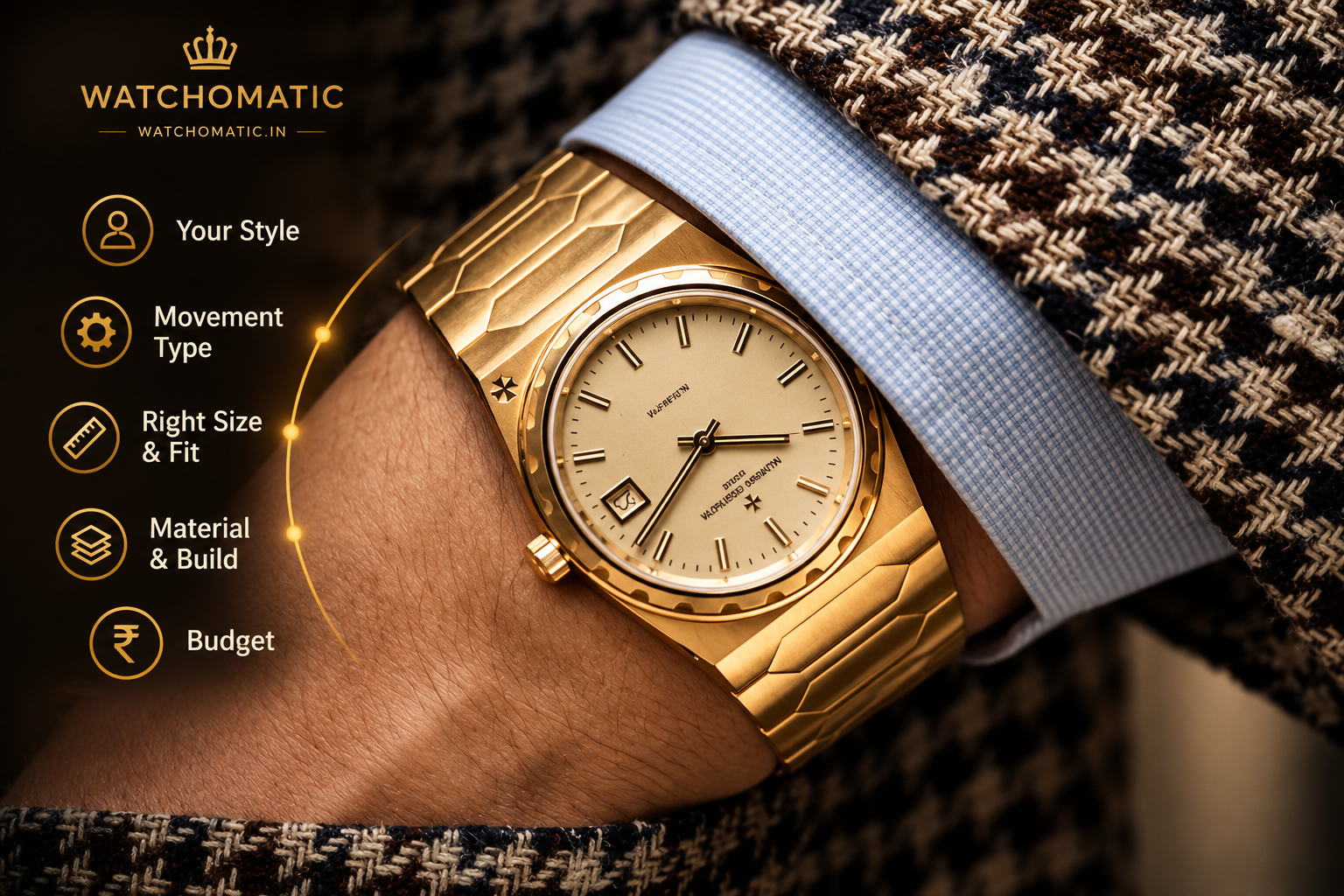
How to Choose the Right Watch for Men: Complete Buying Guide

Choosing the right watch for men is about more than simply checking the time. A well-selected wristwatch reflects personal style, complements your outfit and adds sophistication to your overall appearance. Whether you prefer a classic dress watch, a modern chronograph or a bold luxury-inspired design, finding the right timepiece requires considering several important factors.
How to Choose a Watch for Men
With countless designs, movements, dial sizes and strap materials available, selecting the perfect watch can sometimes feel confusing. This complete men’s watch buying guide will help you understand what to look for before choosing a watch that matches your lifestyle, preferences and budget.
1. Understand Your Personal Style

How to Choose a Watch for Men
The first step in learning how to choose a watch for men is understanding your personal style.
A watch should complement your wardrobe rather than look out of place. Consider where and how frequently you plan to wear it.
Classic Style: Traditional dial designs, clean indices and leather straps create an elegant appearance. These watches work particularly well with formal outfits.
Sporty Style: Chronograph displays, bold bezels and stainless steel bracelets offer a dynamic look suitable for casual and active lifestyles.
Luxury Style: Refined finishing, distinctive dial details and sophisticated case designs create a premium appearance.
Minimalist Style: Simple dials, slim profiles and understated details are ideal for men who prefer clean and contemporary accessories.
How to Choose a Watch for Men
Choose a design that feels natural with your everyday clothing and personal preferences.
2. Choose the Right Watch Movement

The movement is the mechanism responsible for keeping a watch running. Understanding different watch movements helps you make a more informed buying decision.
How to Choose a Watch for Men
Quartz Watches
Quartz watches operate using a battery-powered electronic movement regulated by a quartz crystal.
Key characteristics include:
- Reliable timekeeping.
- Convenient everyday operation.
- Generally lower maintenance requirements.
- Wide availability of styles and designs.
Quartz watches are a practical choice for men who prefer convenience and simplicity.
Automatic Watches
Automatic watches use a mechanical movement that winds itself through the natural movement of the wearer’s wrist.
Key characteristics include:
- Mechanical engineering.
- No conventional battery required.
- Traditional watchmaking appeal.
- Regular wearing or manual winding may be necessary.
Automatic watches appeal to enthusiasts who appreciate mechanical movements and traditional craftsmanship.
Mechanical Watches
Learn more about mechanical and automatic watch movements to understand how traditional watch mechanisms work.
For additional technical information, visit the Seiko official watch instruction guide.
Mechanical watches operate through a manually wound mainspring. They represent traditional watchmaking and require periodic winding to maintain operation.
Your choice should depend on whether you prioritise convenience, mechanical engineering or traditional watchmaking.
3. Select the Correct Watch Dial Size

Watch size plays an important role in comfort and appearance. A watch that is too large or too small may look disproportionate on your wrist.
How to Choose a Watch for Men
Here are some general case-size guidelines:
- 34–38 mm: Often suitable for smaller wrists and understated styling.
- 39–42 mm: A versatile range for many men’s wrists.
- 43–46 mm: Suitable for men who prefer larger, more noticeable watches.
- 47 mm and above: Bold designs that create a strong visual presence.
These are general guidelines rather than strict rules. Case shape, lug-to-lug distance, thickness and personal preference also influence how a watch fits.
Before purchasing, consider your wrist circumference and the overall dimensions of the watch.
Introduction
Learning how to choose a watch for men starts with understanding your personal style, wrist size and everyday requirements.
Watch Movement Section
When learning how to choose a watch for men, understanding the difference between quartz and automatic movements is essential.
Watch Size Section
Another important factor in how to choose a watch for men is selecting the correct case diameter for your wrist.
Budget Section
Your budget also plays an important role when deciding how to choose a watch for men.
Conclusion
Ultimately, knowing how to choose a watch for men helps you find a timepiece that complements your personality and lifestyle.
4. Choose the Right Strap Material
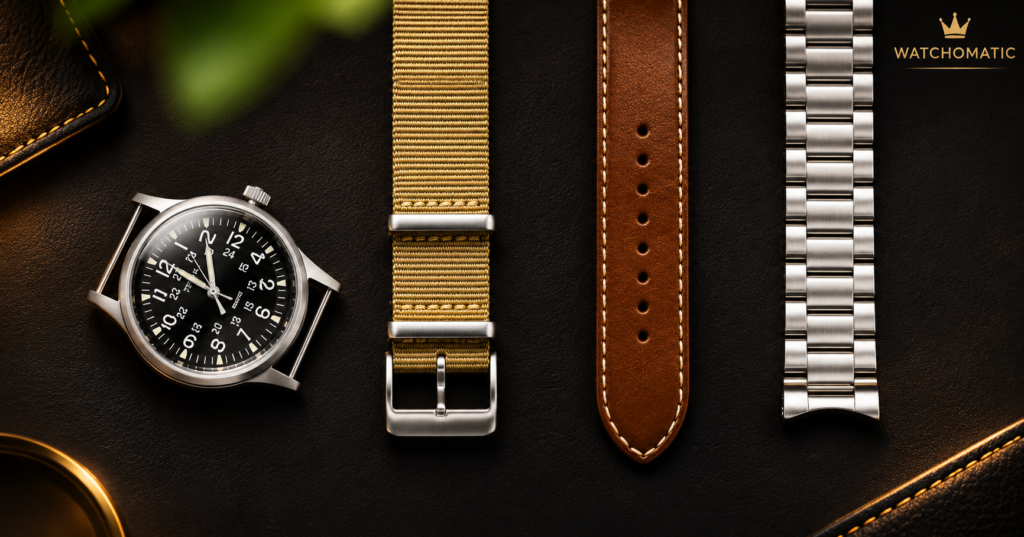
The strap or bracelet can significantly change the appearance of a watch.
Stainless Steel Bracelet
Stainless steel bracelets offer a versatile and durable appearance. They complement casual, business and semi-formal outfits.
Leather Strap
Leather straps create a refined and traditional appearance. They are particularly suitable for formal occasions, office wear and classic styling.
Silicone or Rubber Strap
Rubber and silicone straps are lightweight and comfortable. They are commonly found in sporty and contemporary watch designs.
Metal Bracelet with Gold or Silver Finish
Gold-tone and silver-tone bracelets create distinctive styling options. Choose a finish that complements your accessories and wardrobe.
5. Pick a Dial Colour That Matches Your Wardrobe

Dial colour can influence how easily a watch coordinates with different outfits.
Black Dial: A versatile choice that creates a sophisticated and confident appearance.
Silver or White Dial: Offers a clean, classic look suitable for formal and everyday styling.
Blue Dial: Adds personality while maintaining an elegant appearance.
Green Dial: Provides a distinctive contemporary style.
Gold Dial: Creates a bold and luxurious visual impression.
If you are purchasing your first watch, consider choosing a versatile colour that works with most of your wardrobe.
Introduction
Learning how to choose a watch for men starts with understanding your personal style, wrist size and everyday requirements.
Watch Movement Section
When learning how to choose a watch for men, understanding the difference between quartz and automatic movements is essential.
Watch Size Section
Another important factor in how to choose a watch for men is selecting the correct case diameter for your wrist.
Budget Section
Your budget also plays an important role when deciding how to choose a watch for men.
Conclusion
Ultimately, knowing how to choose a watch for men helps you find a timepiece that complements your personality and lifestyle.
6. Consider the Watch Case Material
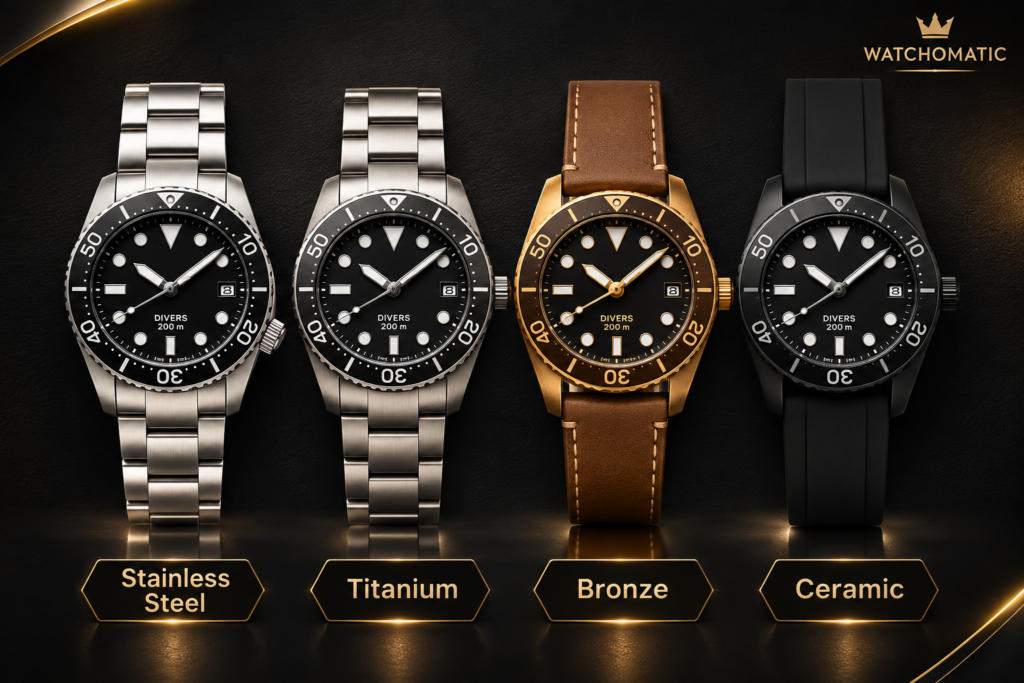
The case protects the internal movement and contributes to the overall appearance of a timepiece.
Common case materials and finishes include:
- Stainless steel: Popular for its durability and versatile appearance.
- Titanium: Known for its lightweight properties.
- Ceramic: Appreciated for its distinctive finish and scratch resistance.
- Gold-tone finishes: Offer a warm and premium aesthetic.
Always check the actual material specifications before purchasing. A gold-tone finish does not necessarily mean the watch is made from solid gold.
7. Choose a Watch for the Occasion
Different occasions may call for different watch styles.
Office and Business Wear
Choose a clean dial, balanced case size and refined bracelet or leather strap. Avoid unnecessarily oversized designs if you prefer a traditional professional appearance.
Casual Everyday Wear
A versatile stainless steel watch or minimalist design can complement everyday outfits.
Weddings and Special Occasions
Consider elegant finishes, refined dial details and designs that complement your formal clothing.
Parties and Social Events
Chronograph-inspired designs, distinctive dial colours and bold case shapes can create a stronger style statement.
The best everyday watch is one that matches your routine while remaining comfortable throughout the day.
8. Understand Water Resistance
Water resistance is an important specification to check before buying a watch.
Common water-resistance markings include:
- 3 ATM / 30 metres: Generally suitable for minor splashes under specified conditions.
- 5 ATM / 50 metres: Offers greater water resistance, subject to manufacturer guidance.
- 10 ATM / 100 metres: Designed for more demanding water-related activities when permitted by the manufacturer.
Remember that water-resistance ratings do not guarantee suitability for every water activity. Conditions, seals, age and maintenance can affect actual performance.
Always follow the manufacturer’s water-resistance instructions.
9. Set a Realistic Watch Budget
A good watch should match your budget and expectations.
Before making a purchase, consider:
- Design and finishing.
- Movement type.
- Materials used.
- Available specifications.
- Comfort and everyday usability.
- Warranty and after-sales support.
Do not choose a watch based solely on its appearance. Review its specifications and understand exactly what you are purchasing.
10. Check the Details Before Buying
Before finalising your purchase, review the following details:
- Correct model and design.
- Case diameter and thickness.
- Movement type.
- Dial and strap material.
- Water-resistance rating.
- Available functions.
- Product photographs.
- Warranty and return conditions.
- Seller information and product specifications.
A careful comparison can help you select a watch that offers the right combination of design, comfort and functionality.
Frequently Asked Questions
1. How do I choose the right watch for men?
Consider your personal style, wrist size, preferred movement, strap material, dial colour and budget. Choose a watch that complements your lifestyle and wardrobe.
2. Which watch size is best for men?
Case sizes between 39 mm and 42 mm are versatile options for many men. However, wrist circumference, case shape and personal preference should determine the final choice.
3. Which is better: automatic or quartz watches?
Quartz watches offer convenient battery-powered operation and accurate timekeeping. Automatic watches appeal to enthusiasts who appreciate mechanical movements. Neither is universally better; the right choice depends on your preferences.
4. Which dial colour is best for everyday use?
Black, silver, white and blue are versatile dial colours that coordinate with many clothing styles.
5. Are stainless steel watches suitable for everyday wear?
Yes. Stainless steel watches are popular for everyday use because they offer a versatile appearance and are generally durable.
6. What should I check before purchasing a watch online?
Review the product specifications, photographs, movement, materials, water resistance, seller information, warranty and return policy.
Final Thoughts
Choosing the right watch for men becomes easier when you understand your personal style, preferred movement, wrist size and everyday requirements.
Whether you prefer a minimalist design, a classic dress watch, a sporty chronograph or a bold luxury-inspired timepiece, the best choice is one that reflects your personality and feels comfortable to wear.
Explore the Watchomatic collection to discover watch designs that complement different styles, occasions and preferences.
Introduction
Learning how to choose a watch for men starts with understanding your personal style, wrist size and everyday requirements.
Watch Movement Section
When learning how to choose a watch for men, understanding the difference between quartz and automatic movements is essential.
Watch Size Section
Another important factor in how to choose a watch for men is selecting the correct case diameter for your wrist.
Budget Section
Your budget also plays an important role when deciding how to choose a watch for men.
Conclusion
Ultimately, knowing how to choose a watch for men helps you find a timepiece that complements your personality and lifestyle.


About author

Related posts

For years, oversized watches dominated men’s fashion. Large cases, bold bezels and sporty designs became popular choices for men who wanted their watches to make... Continue reading

Choosing the right watch involves more than selecting an attractive dial or premium design. One of the most important decisions is understanding the movement inside... Continue reading

Finding the best luxury watches under ₹10000 in India has become much easier than ever. Today, premium-quality timepieces offer excellent craftsmanship, stylish designs, and reliable... Continue reading
Add comment